

Keeping a business’s books in order on a regular basis takes trained people, a fixed routine and accounting software that is set up properly. At PCS Global, we provide outsourced bookkeeping services in the USA to small businesses, growing companies and CPA firms, where our team takes care of recording transactions, bank reconciliations and month-end bookkeeping. We map our work to your chart of accounts and coding rules and work inside QuickBooks, Xero or whichever platform your business is already on.





Outsourced bookkeeping simply means that an external team looks after your day-to-day financial records for you. When businesses start outsourcing bookkeeping services, the work usually handed over first is the recording of sales and expenses, entry of vendor bills and customer invoices, bank and credit card reconciliations and the upkeep of the general ledger.
The virtual bookkeeping services USA businesses use today are delivered fully remote. Our bookkeepers log in to your accounting software, and receipts, bills and statements are shared with us through secure apps or your document portal. Approving payments and deciding credit terms remains with your team at all times.
In most cases, a client begins with something small, like bank reconciliations or bill entry. Once the process settles down and they are happy with the output, the engagement is usually extended to full monthly bookkeeping and closing. Where you need adjustments, analysis or US GAAP reporting on top of the books, that is handled by our accounting outsourcing services.
A retail store with two outlets and a startup preparing for its next funding round may look very different, but both depend on their books for tax returns, bank loans and investor updates. Building this function in-house means recruiting a bookkeeper, training them on your systems and then arranging backup for leave and the busiest months of the year.
Our bookkeepers spend their working day in QuickBooks, Xero and the bank feeds and apps that connect to them. They are trained on US bookkeeping practices, which includes 1099 vendor tracking and recording sales tax as a liability. Since our teams work in multiple shifts, the bookkeeping keeps moving through holidays and the busier months of the year.
For owners and office managers, this means more of the week goes into customers, sales and operations. Every month you get reports that show how cash and profit are moving, and when year-end comes around, your CPA receives books that are already reconciled and ready for tax work.
Discuss Your Outsourcing Requirements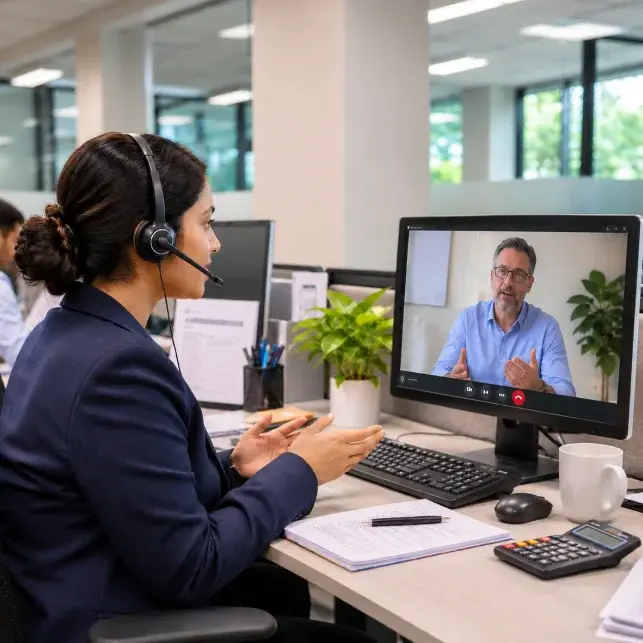
Transaction recording, payables and receivables bookkeeping and bank reconciliations are what our US clients ask for most often. Most clients take two or more services, so we put together a package around your software, the number of transactions you handle and how often you want reporting.

Depending on how many transactions you have, we record sales, expenses, deposits and transfers either daily or weekly. Bank and credit card feeds are categorized as per your chart of accounts, and for regular items like rent or software subscriptions, we set up bank rules. Every entry is backed by its receipt or document.

Our AP bookkeeping begins from the time a vendor bill is received. The bill is entered, coded to the correct expense account and later matched with the payment once it clears the bank. We also collect Form W-9 details when a new vendor is added and keep track of 1099-reportable payments during the year, which helps your CPA at year-end.

Cash flow depends a lot on invoices going out on time and payments being recorded correctly. We enter customer invoices and deposits as they happen and apply every payment to its open invoice, partial payments and credit memos included. Customer balance reports can be pulled whenever you need them, while follow-up and credit decisions stay with your team.

All bank, credit card and merchant accounts are reconciled to the monthly statement, line by line. Any uncleared checks, deposits in transit or transfers between accounts are listed in a reconciliation schedule, so your book balance agrees with the bank and your CPA has a reliable number to start from.

A profit and loss statement, balance sheet and AR and AP aging reports are prepared every month straight from your books, in the format you prefer. Along with them, we add a short note on the main movements for the month. US GAAP financial statements and detailed analysis are part of our accounting outsourcing services.

Month-end closing is done against a checklist that we agree with you during onboarding. Accounts are reconciled, transactions categorized and any open items sent to you, after which the period is closed and locked in your software. At year-end, your CPA gets tax-ready books along with all supporting documents.
Most CPA firms get in touch with us either just before busy season or when client write-up work starts growing faster than their own team. As one of the outsourced bookkeeping firms that CPA practices partner with, we operate in your clients’ files and your practice tools, follow your procedures and send every file back to you for review.
Request a Consultation
We offer white label bookkeeping service for CPA firms, where client books are kept under your firm’s name, with your coding standards and report layouts. Our team stays in the background and works as an extension of your practice, so your clients keep receiving monthly records from you and your firm remains their advisor.
Many firms have clients who send statements, receipts and bank downloads every month and expect the books to be done. We take on this write-up work and complete the posting, reconciliation and summary inside each client’s file, so your staff receive books that are ready for review and for the advisory conversation with the client.
It is quite common for a new client to come in with books that need to be brought up to date. We work through the file in date order, correct the categories, clear duplicate entries and reconcile every account, with each change documented. Once the file is current, the regular monthly bookkeeping takes over from there.
Ahead of busy season, we reconcile and organize client books for your tax preparers. Fixed asset additions, loan balances and owner draws are summarized in the schedule format your team is used to, which gives your preparers a clear set of numbers to start each return. See our tax outsourcing services.
Your clients may be spread across QuickBooks Online, Xero, Sage and other platforms. Our bookkeepers are trained to work across all these platforms, and your firm’s standards are applied in the same manner whichever system the client is on. Your managers get every file in one familiar structure for review, and status updates reach them through the channels fixed during onboarding.





Construction

Real Estate & Property Management
HOA & Community Associations

Law Firms

Healthcare & Dental Practices

E-commerce & Retail

Restaurants & Hospitality

Manufacturing

Accounting Firms
Every engagement goes through five stages before regular bookkeeping begins, and by the end of it, both sides are clear on who is responsible for what and by when.
We begin by understanding your business, the accounting software you use, your bank accounts, monthly transaction volume and reporting deadlines. We also speak with the key stakeholders to know who approves what and how often updates are needed. This is what helps us recommend the right service mix and engagement model.
Our team goes through your current file, the chart of accounts, reconciliation status and connected apps. If the books need to be caught up, a plan is agreed to bring them current. From these discussions, we prepare a scope document with deliverables, schedule, point of contact and escalation levels.
Your account gets a bookkeeper and a reviewer, chosen on the basis of the skills and experience your engagement calls for, and one named point of contact. In the days before the first period begins, the team goes through your setup, coding rules and reporting preferences, so that the work is right from the very first month.
Once the contractual formalities are complete, bank feeds, receipt apps and document folders are connected, and you decide the access levels. Coding rules, cut-off dates and reporting dates are written into a standard operating procedure (SOP) agreed with you, which both teams then follow.
Daily bookkeeping is done as per the agreed SOP. Transactions are posted and reconciled on schedule, and each month is closed with a review and a short summary. Quality and turnaround time are reviewed with you at set intervals, and we keep adjusting the service as your business changes.
Handing over bank details, vendor information and customer records to an external team is a big decision for any business. At PCS Global, data security and quality control are built into every bookkeeping engagement and are backed by our ISO 27001 and ISO 9001 certifications.


An NDA is signed before every engagement. Employees handling client work are bound by confidentiality agreements, ensuring your records are used only for agreed bookkeeping services, during and after the engagement.
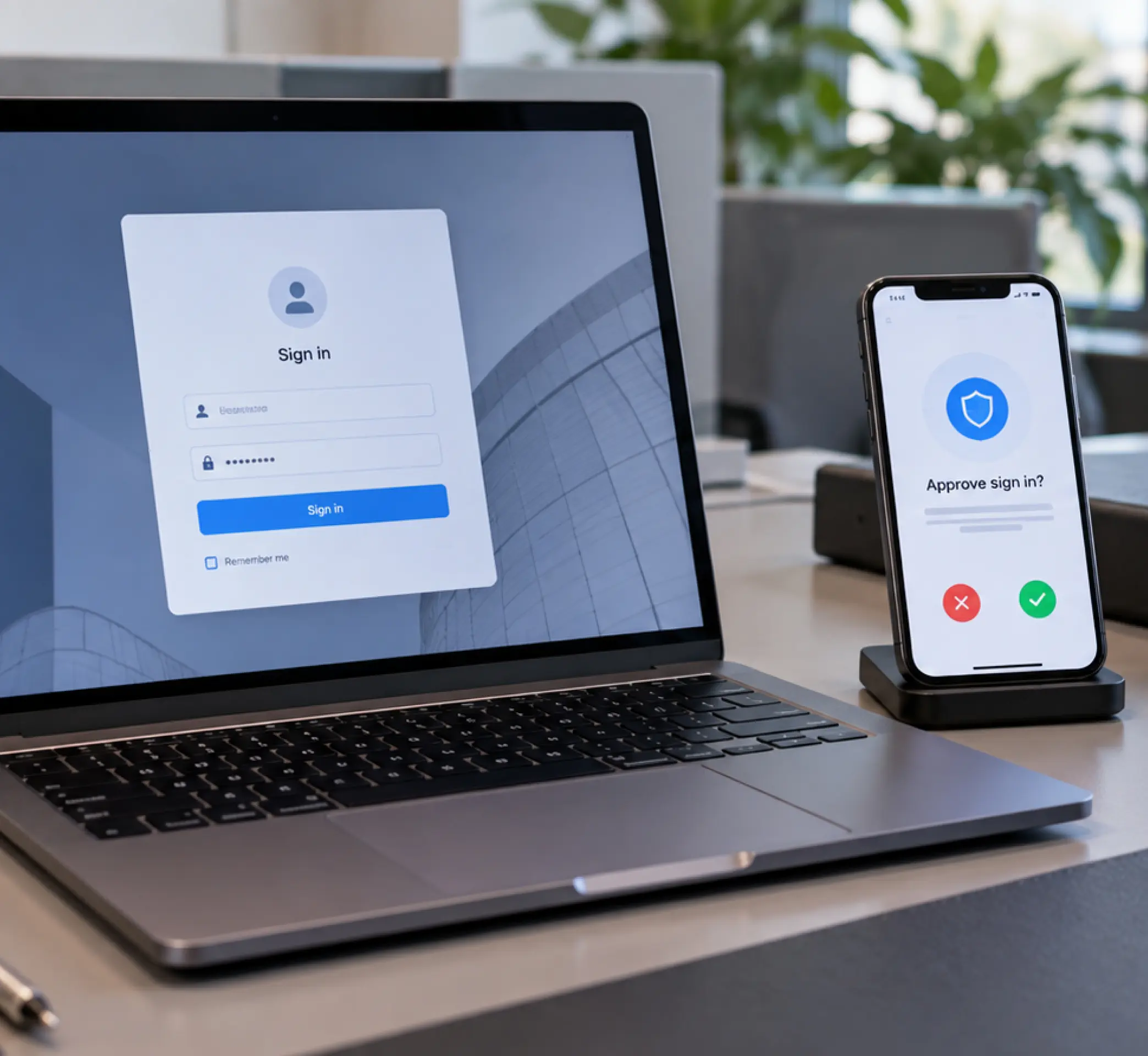
Your bank logins and payment credentials stay with your business. Our bookkeepers use approved bank feeds, individual user accounts and multi-factor authentication, with access levels controlled by you.
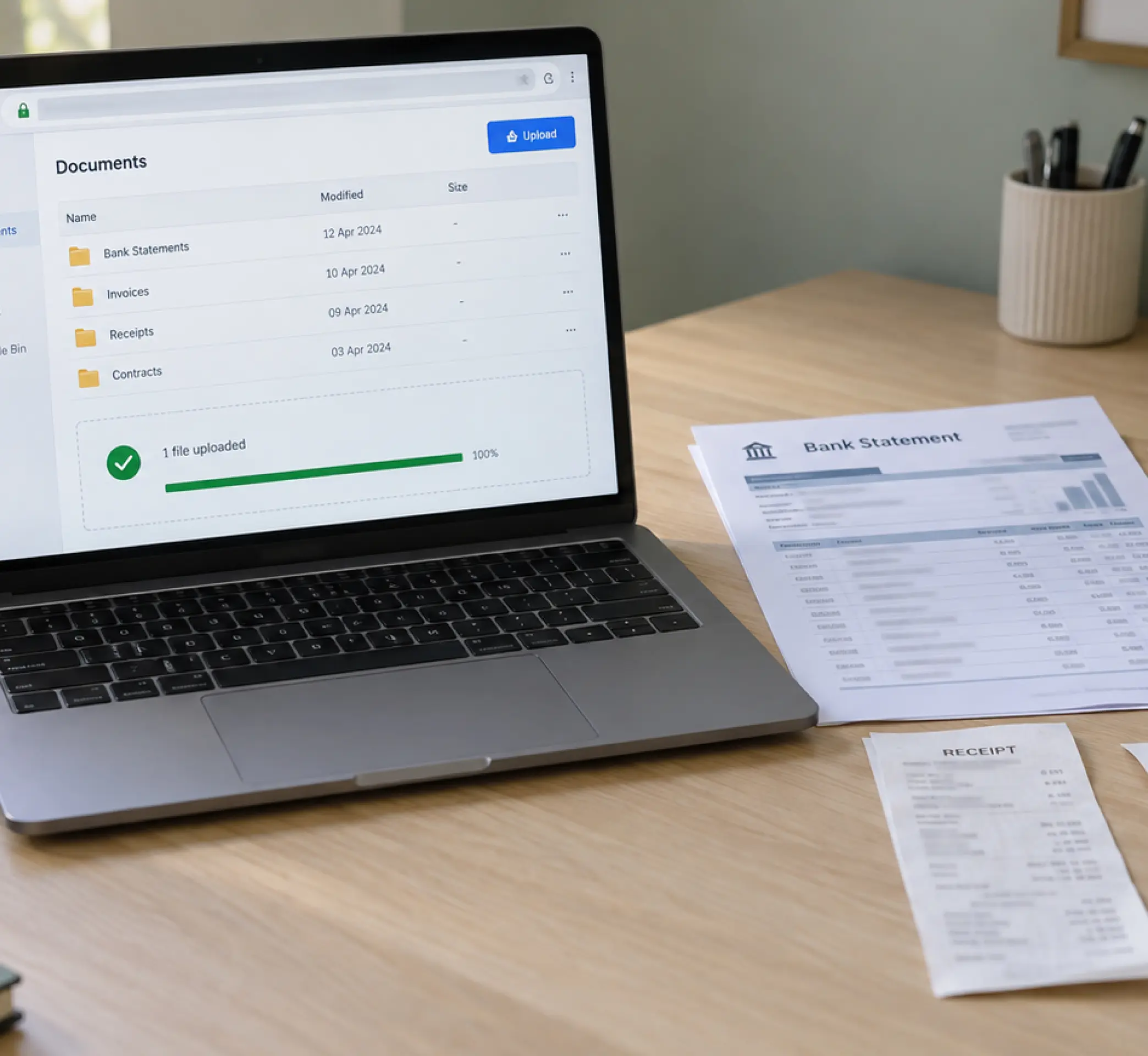
Receipts, bills and statements are shared through monitored, TLS 1.3-encrypted channels and stored with AES-256 encryption. Restricted personal device access, firewalls and intrusion prevention systems protect your data.

Before month-end closure, a second bookkeeper reviews reconciliations, categorization and open items against an agreed checklist. Queries are consolidated and shared through your preferred communication channel.
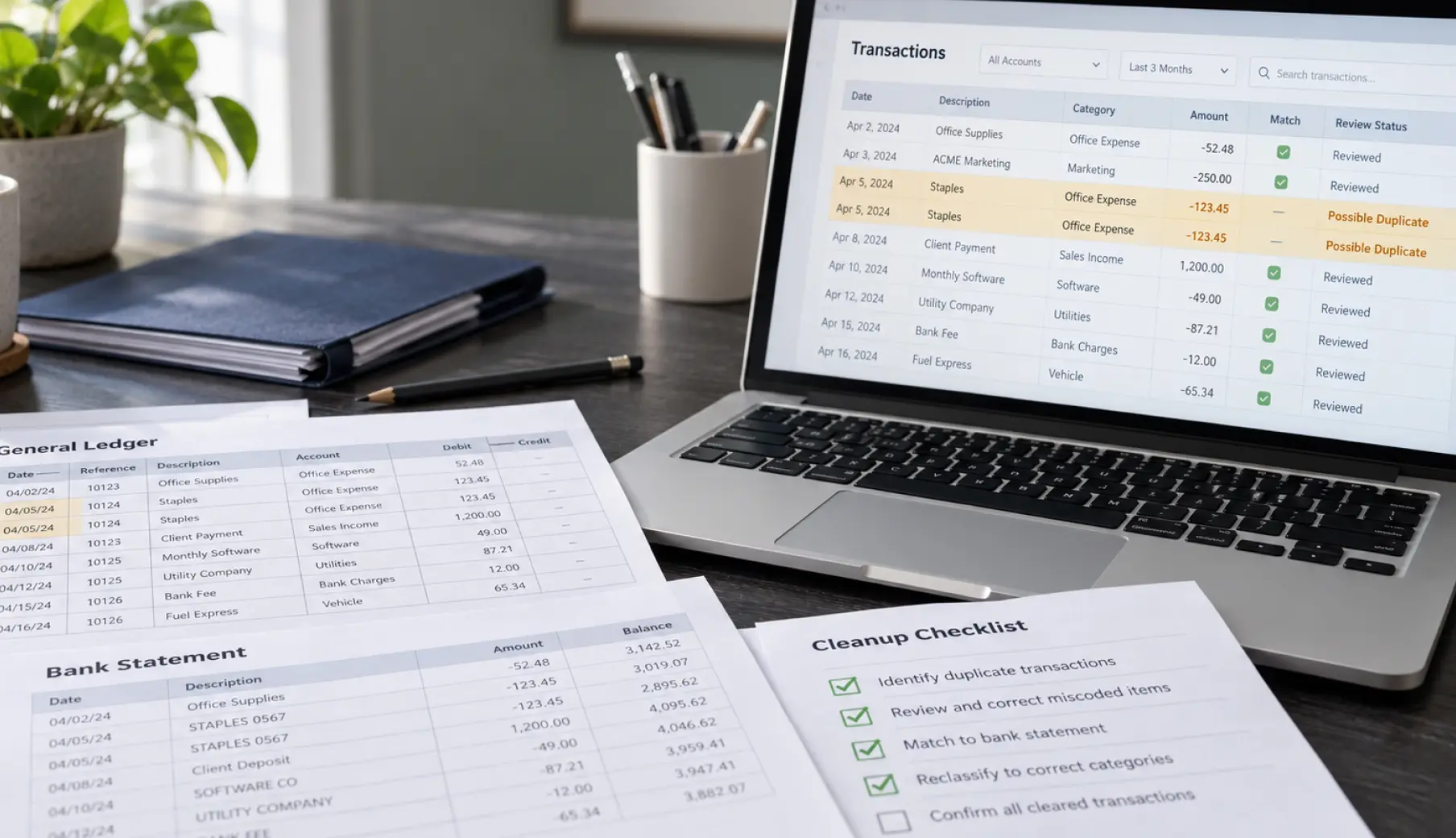
Every bookkeeping process follows documented workflows and quality checkpoints under our ISO 9001-certified system. Our QC team maintains and updates checklists around your accounts, software and processes.
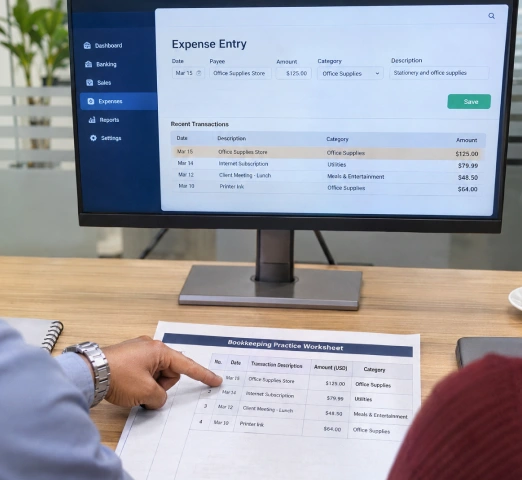
Our bookkeepers receive training in US bookkeeping practices, QuickBooks, Xero, sales tax and 1099 records before client assignment. Regular sessions cover software updates and data protection.

ISO 27001-certified security and GDPR-compliant data handling protect your information. Vendor tax IDs, customer details and payment records are restricted to your assigned team, masked wherever possible and kept within approved systems.
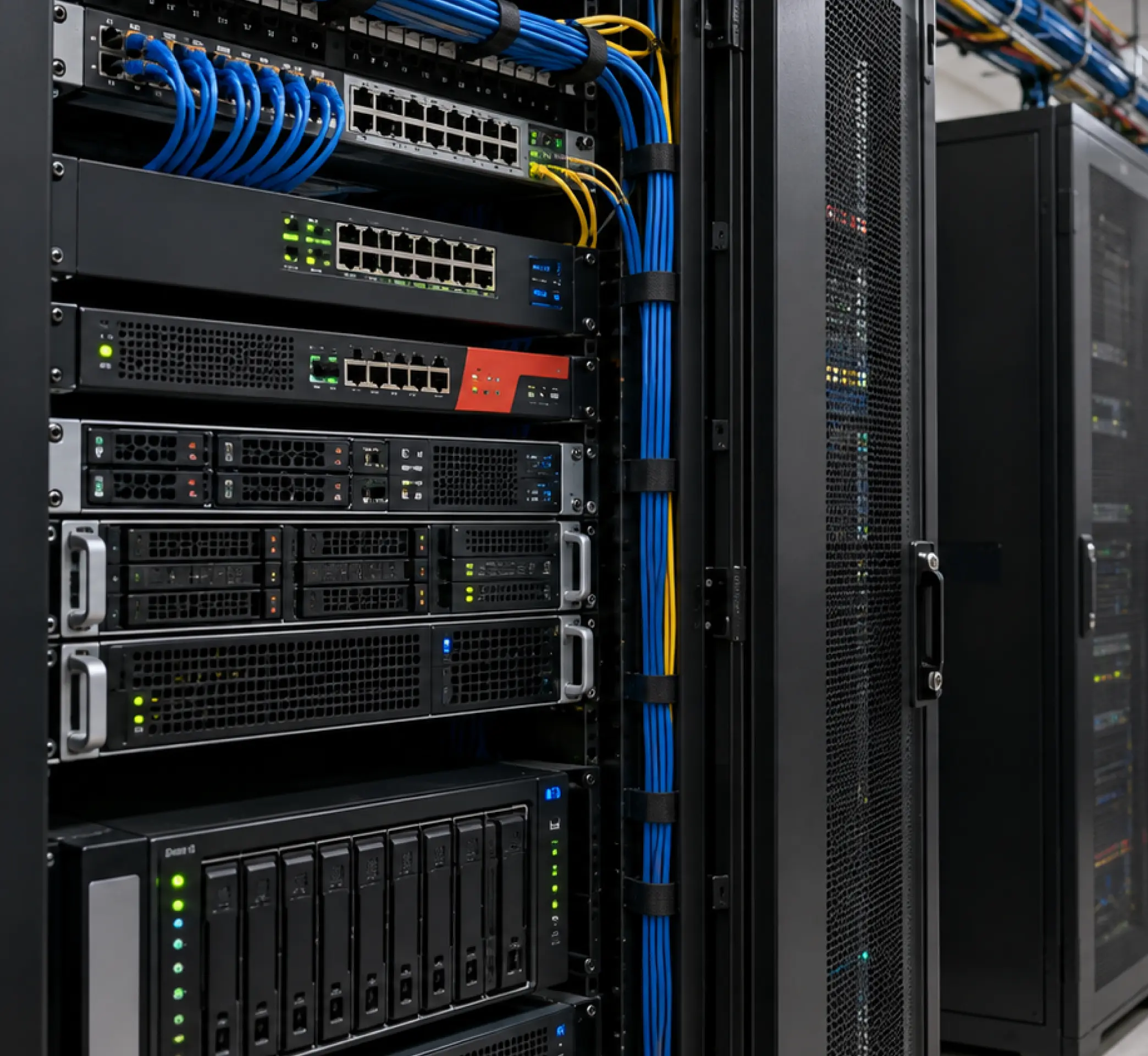
Encrypted storage, immutable backups and off-site replication protect client data. Monthly vulnerability scans, quarterly penetration tests and backup internet connections help maintain operations and ensure continuity during team absences.
Bookkeeping partners are generally assessed on their experience, team continuity, data security and how carefully the work is reviewed, and these are also the points our US clients look at most. PCS Global has so far worked with 60+ clients on 800+ projects, with a team that brings more than 100 years of combined experience.

Our bookkeepers handle US transactions, bank feeds and sales tax tracking on a daily basis and understand both cash and accrual bookkeeping. The company was founded by Malay Dalal, a Fellow Chartered Accountant with more than 35 years of experience, and his standards shape how each engagement is staffed and reviewed.
We work directly in the platform you use today, or the one you are planning to move to, be it QuickBooks, Xero, Sage or NetSuite, including the apps connected to it. Your data remains in your system, and your reports and integrations continue to run as they do now.
Where the workload is steady, we assign dedicated bookkeepers to your account. Within a short span, they get familiar with your vendors, customers, coding preferences and approval procedures, and planned backup coverage keeps the schedule on track during holidays and leave.
Sales tax collected is recorded as a liability by state, and vendor W-9s and 1099-reportable payments are tracked during the year. Your CPA gets organized records for every filing, while the filings themselves remain with you or your CPA.
We plan our work around your CPA’s year-end schedule, adjusting entries and the report formats they prefer. Journal entries they share are posted promptly, and any schedules they request are prepared in their layout, which keeps your CPA at the center of your financial process.
There is one named point of contact for your bookkeeping and an escalation matrix that is agreed during onboarding. Updates are shared on a fixed schedule, and your contact takes care of priorities, questions and any change in scope, software or reporting.
It mainly depends on the number of transactions you have each month, how many bank and card accounts there are, whether any catch-up work is needed and how often you want reports. After the scope is agreed, we share a pricing proposal, so the cost is clear before we start.
There are three main reasons. First, the books stay up to date through the year. Second, your decisions are based on reconciled numbers. Third, your CPA gets organized records at year-end, and owners get back time for customers and growth.
Yes, and many US businesses already do this for their day-to-day records. While choosing a provider, check for signed NDAs, role-based access, certified data security and whether the work is done inside your own accounting software.
Yes. Our bookkeepers work in QuickBooks, Xero, Sage, NetSuite, Zoho Books, FreshBooks and Microsoft Excel, as well as the receipt and bill apps connected to them. We can work in your current platform or the one you plan to move to.
Yes. We are ISO 27001 certified and GDPR compliant. NDAs, role-based access, multi-factor authentication and encrypted file sharing are standard on every engagement, and only the team working on your account can see your data.
Bookkeeping is the recording and reconciling of day-to-day transactions. Accounting takes these records further into adjustments, analysis and US GAAP reporting. See our accounting outsourcing services.
Yes. The backlog is worked through in date order, every account is reconciled and each change is documented. After the books are current, regular monthly bookkeeping carries on from there.
Yes. We collect W-9 details, track 1099-reportable payments and record sales tax collected as a liability by state. Filing remains with you or your CPA, based on the records we maintain.
Look at their US bookkeeping experience, how the work is reviewed, how data is protected and whether the same people will stay on your file. While choosing outsourced bookkeeping solutions, it also helps to ask for a written scope with deliverables, schedule and points of contact.
Tell us about your bookkeeping workload, the software you use and your reporting deadlines. We’ll recommend an outsourcing model and level of support that suits your business or firm.
Contact on WhatsApp
×